Huaraz is located in the “Callejón de Huaylas” Andean valley. It has an area of more than 180 km flanked by the White and Black mountain ranges, and it is crossed by the rushing Santa River. Huaraz has several microclimates and altitudes from 1,000 meters above sea level to 6,747 meters above sea level. It starts at the Conococha Lagoon (4,100 meters above sea level). Huaraz is the starting point to know all the “Callejón de Huaylas’ “attractions. The best season to take a Huaraz tour is during the Andean summer (from May to October). The rainy season is from November to April.
The “Callejón de Huaylas” is a complete circuit with several and integrative attractions, therefore, it is recommended to visit it all along with the traditional tourist spots such as the Main Square Cathedral and churches. The “Callejón” is composed of Recuay, Aija, Marcará, Carhuáz, Mancos, Yungay and Caraz, where the visitors will have direct contact with the natural beauties, culture and folklore. During the Huaraz tour, you will see the wonderful sculpture and architecture in the Willcahuín and Honcopampa “chulpas” or graves, as well as the Janku tomb, and places like Huallac, Kekamarca, Marcún and Keyash.
Huaraz was named “Natural Paradise of the World” in the Swiss Tourism Awards 2007 that was carried out in Lugano – Switzerland.

The Amazon River gives the Peruvian rainforest its name – Peruvian Amazonia. It was discovered by Francisco de Orellana in 1541 and it is the largest and mightiest river in the world. Its watercourse reaches a width of 4,000 meters in some sectors making it look like a sea. On the peruvian amazon tour, you will discover all the rivers that have their origin on the eastern slope of the Andes, which are tributaries of the Amazon River. They form swamps, marshes and channel labyrinths. The Peruvian rainforest has an area of 8o million hectares where many flora and fauna species inhabit. It is said that its former inhabitants called the Amazon “Paranaguasú”, which means “great river”. It is also said that the river’s name is the product of the union of two indigenous words: ama (to break) and zona (canoe): canoe-breaker.
Iquitos, the capital of Loreto department, is on the Amazon riverside and it is surrounded by other rivers like the Ninai and the Itaya rivers. In Iquitos, we can find native communities such as the Cocamas, the Boras, the Ticuna and the Witotos. The city was founded by the Jesuit José Bahamonde in 1747.
Enjoy your peruvian amazon trip and get to know an exotic, hot city with an impressive vegetation and it is the entry point to navigate on the Amazon which means getting in contact with nature.
The Pacaya-Samiria National Reserve is a protected area of Peru located in the department of Loreto in the Amazon.

Trujillo Peru is the capital of La Libertad department and it is called « The City of Eternal Spring » because the sun shines every day.
Trujillo was founded by Diego Almagro in 1534. He gave this place its name after the city where Francisco Pizarro was born.
Trujillo is located in the north coast of Peru, on the bank of the Moche River. Trujillo has a very fertile valley, which has allowed its fast development since its founding. We can appreciate artistically forged iron grates in the old big houses, which bring a special distinction to the architecture of this lovely city.
Travel to Trujillo and get to know the city of Chan Chan was the capital of the great Chimú kingdom, a pre-Inca culture. It is located in the Moche Valley. Chan Chan is the biggest mud city in the world. It has a 20 km2 area and it can only be compared to the archaeological remains of Teotihuacán in Mexico or to the ancient cities of Egypt.
Some examples of the greatness of this culture are La Huaca del Sol (a 20-meter-high terraced pyramid), La Huaca de la Luna (amazing murals that represent the Mochica rituals) and El Complejo del Brujo (a 30-meter-high and 15 century-old adobe pyramid)
The Moche Valley was a profitable place to found the city of Trujillo. It is the land of the sun and mining and it is also the land of the national dance of Peru – the Marinera- that is a source of pride because of its glamour and sensuality. You should not miss this when you travel to Trujillo.
Know about our suggested trips visiting Trujillo.

Travel to Chiclayo, known as the “Friendship´s Capital”, is one of the most important cities in Peru. It is located in the department of Lambayeque in the north of Peru. It offers a wide variety of tourist destinations such as archeological remains, museums and relics that are part of the country’s ancient past’s heritage and an important part of the history of Peru.
Chiclayo wasn’t founded by Spanish conquerors, it was officially acknowledged as a province thanks to José Leonardo Ortiz, our national hero and it was authenticated as such by decree in April 18th, 1935.
Their ancient inhabitants built the Chimú culture, a great pre-Inca culture. The Chimú established big urban centers and moved their capital to strategic zones. This is where the remains of the Lord of Sipán were found. The Incas managed to conquer the Chimú territory after almost 4 decades in which Pachacútec, Inca Yupanqui and Huayna Cápac intervened.
When we talk about the Lord of Sipán, we’re talking about one of the most emblematic figures of the Mochica culture. The Lord of Sipán was an ancient Mochica ruler from the 3rd century, whose discovery proved far-reaching for world archeology as his tomb was the first royal burial site found intact in South America, and belonging to a Peruvian civilization prior to the Inca Empire. You should not miss this when you travel to Chiclayo.

The reserve is located in the department of Madre de Dios, Tambopata province. It has 274,690.00-ha area and it is one of the best places to discover the Amazonia since it has one of the highest biodiversity indexes in the world: 632 bird species, 169 mammal species and 1,200 butterfly species. It limits on the south with the Bahuaja Sonene National Park, both constitute a very important conservation area in Peru.
With the Tambopata National Park tour you can visit the Sandoval Lake, just half an hour by boat from Puerto Maldonado, is the park’s main attraction. We can find lodges to stay in and an observation tower to have a panoramic view of the huge landscape, which is home to macaws and river otters.
The collpas (clay licks) at the rivers´ shores, are also this place’s attractions. Hundreds of macaws, hawks and parrots gather between 5:30 a.m. and 9:00 a.m. to eat mineral salts. There are also bush or inland collpas where we can see (usually at night) collared peccaries, white-lipped peccaries and South American tapirs. The biggest inland collpa in the whole Amazonia is the collpa Colorado.
On the tambopata national reserve tours meet the Ese Eja ethnicity, that is currently divided in three communities: Palma Real, Sonene and Infierno, has lived in Tambopata National Park from ancient times and they know the reserve to the millimeter. The Infierno community works with private companies to offer accommodation and several tourist services such as activities and guided tours.
Learn about our suggested journeys visiting Tambopata National Park.

The Huacachina lagoon is located in Ica, in the department with the same name, south of Lima, capital of Peru.
On your Ica tour, get to know one of its best-known activities is the production of Pisco, a distilled spirit made from grapes with designation of origin from the valley of Pisco, located in this region since the 16th century.
We can also find in the Ica tour, one of the oases of the Peruvian coast: the Huacachina, which is located 5 km from the city and is easily accessible by car. The lagoon emerges due to the upwelling of underground water currents.
The Paracas National Reserve is in Ica, to the north. It preserves a wide diversity of marine species and birds. To the south we can find the famous Nazca lines, enigmatic geoglyphs that date to Nazca culture times.
The confluence between the sea and the desert make the Paracas National Reserve, a coastal paradise in which nest more than 200 species of endemic, resident, and migratory birds of the Humboldt Current, such as the tendril (inca tern).
There are 216 bird species in the Reserve, 7 of which are endemic of the Humboldt current.
While birdwatching is possible throughout the year, we recommended that you visit between January and March to watch the migratory Northern birds.
Paracas & Ballestas islands is in the department of Ica, province of Pisco. This sea side town is attractive because of its weather, beaches and beautiful sea side houses.
Paracas means “sand rain” in Quechua. The city got its name because of the strong winds (up to 32 km/h) carrying sand. Paracas was declared a regional reserve for migratory birds.
On the Paracas tour, the visitors can see different ecosystems, archaeological remains from the Paracas culture, the place where San Martín disembarked and the area’s wide marine fauna diversity (Ballestas islands).
When browsing the Ballestas Islands you will have the possibility to observe a colony of hundreds of sea lions, in addition to different species of birds, both resident and migratory.
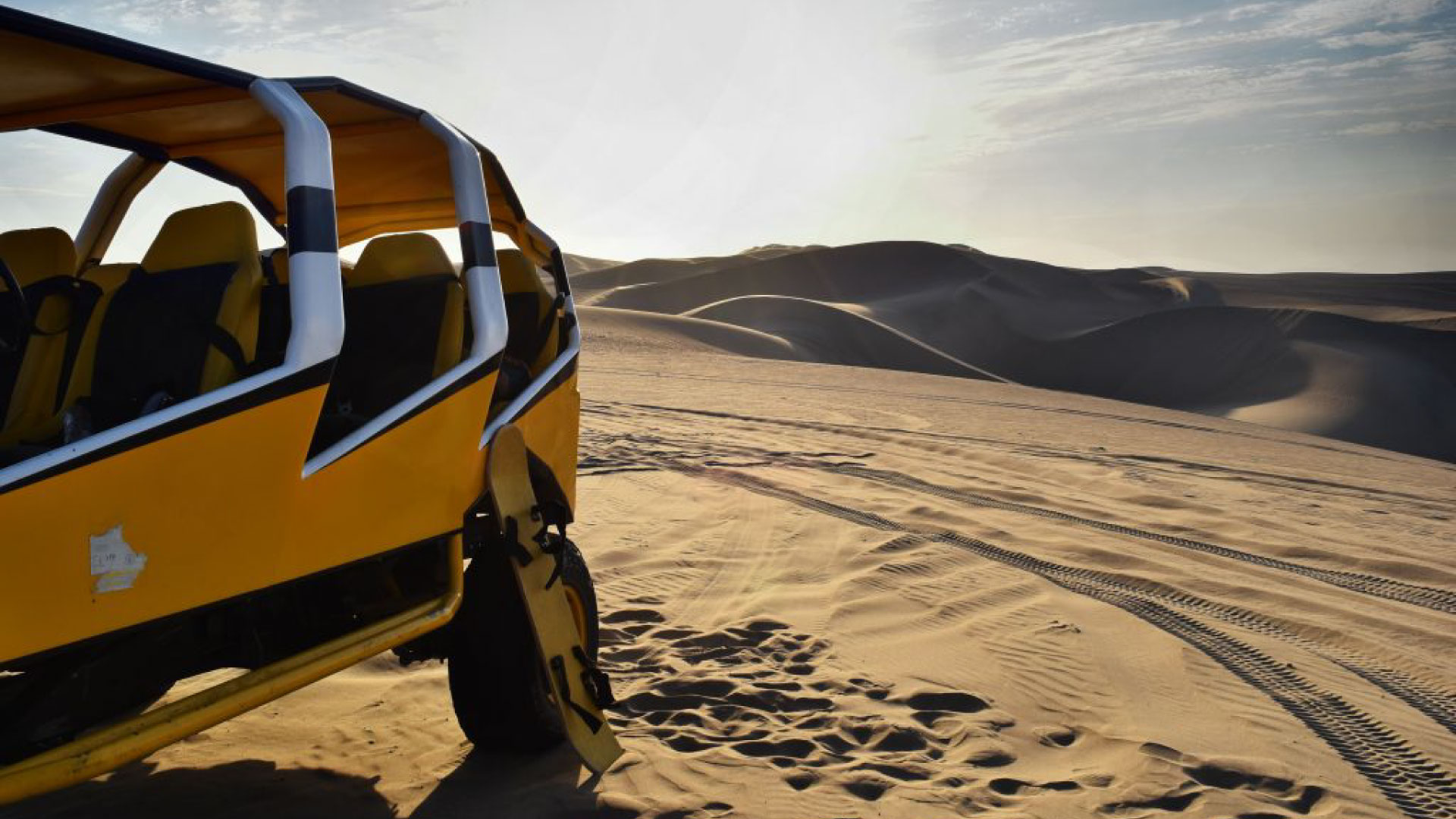
In addition, an hour away by car you can visit the Huacachina oasis where it is possible to do different adventure sports such as buggies, sandboarding and paragliding. In addition, if you like nature on the Paracas trip we will have the opportunity to glamp at the top of the dunes and from there observe one of the most starry skies. And if you are a culture lover, don’t miss flying over the Nazca Lines.
And if you want to learn more about our pre-Inca culture from the Pisco-Paracas airport, you can fly over the Nazca lines.

The Nazca Lines are located in Nasca, one of the five districts of the province of Nasca. It is located in the department of Ica in the south of Peru and its capital, Nasca city, is at 585 meters above sea level.
The town was founded in November 28th, 1548 and during the first republic years it received the district category.
Enjoy the tour to Nasca lines and Paracas, which are located in the Palpa and Nasca valleys in the department of Ica. Also known in the scientific world as geoglyphs, the Nasca lines are one of the most important legacies of the pre-Inca cultures. The Nasca lines are huge drawings of animals, plants, objects, humans, gods and geometric shapes on the desert’s sand. The archaeologists and paranormal investigators have suggested different theories about their origins and meaning. Some interpret the lines as a huge astronomic calendar or a place to worship the water built by the Paracas culture, while others attribute their existence to extraterrestrial forces. In 1990, UNESCO declared the Lines and Geoglyphs of Nasca and Pampas de Jumana as World Heritage.
They are the most outstanding group of geoglyphs anywhere in the world and are unmatched in its extent, magnitude, quantity, size, diversity and ancient tradition to any similar work in the world.

Located at the southeast of Peru, Manu National Park covers the Cusco and Madre de Dios regions and has a 1,716,295.22-ha area. It is the core zone of the Manu Biosphere Reserve and was declared by UNESCO as a Natural World Heritage in 1987. It is inhabited by 30 Quechua-speaking and farming communities and several native Amazonian populations such as the Matsiguenka, Amahuaca, Yaminahua, Piro, Amarakaeri, Huashipaire and Nahua. The park contributes to the acknowledgement and protection of cultural diversity preserving the archaeological heritage through investigation, education and leisure.
We can find more than 1,000 bird species such as harpy eagles, jabirus, Orinoco geese, Andean cocks-of-the-rocks and roseate spoonbills; 200 mammal species as the yellow-tailed woolly monkey, spider monkeys, river otters, jaguars, oncillas, spectacled bears, Andean deer and more than 100 bat species. On the Manu National park tour we can also find trees that are more than 45 meters high and 3 meters in diameter, the lupuna or kapoktree, the cecropia, the balsa tree, the cedar, the tornillo and the strangler fig stand out.
Manu holds the title of the most mega diverse area in the world, the Manu National Park is a vibrant paradise between the Andes and the Peruvian Amazon in which numerous rare and exotic bird species can be spotted by the observer including the cock-of-the-rock (Rupicola peruviana).

Cusco was the capital of the Inca Empire. The city evokes the greatness of the sons of the sun god through its stone walls that are proudly preserved.
The city is located in the Huatanay River Valley, in the southeastern Andes of Peru at 3.360 meters above sea level. Cusco was the Inca Empire’s center, and it is called the «Navel of the World». This is why a tour to Cusco is an unforgettable experience, unveiling some Inca’s mysteries.
The legend tells that the first Inca, Manco Capac founded Cusco around the XI or XII Century, by order of the sun god. On March 23rd 1534, Francisco Pizarro carried out the Spanish founding.
Cusco, is called the Archaeological Capital of America. It is a city that is opened to the world and coexists in special harmony with an urban place. Some Inca monuments like the Koricancha (Temple of the Sun), the Amaru Cancha (Fence of Snakes), the Kiswar Cancha and the Ajlla Wasi amongst others, are the treasures of the mixing races along with the Cathedral, the Temple of San Blas and La Merced Church and Convent.
It is surrounded by amazing archaeological remains. On your day trips to Cusco, discover Fortress of Machu Picchu, the Fortress of Sacsayhuamán, the Ollantaytambo Archaeological Complex, and picturesque villages like Pisac, Calca and Yucay in the Sacred Valley that still preserve their ancestors’ traditions.

Our team will be contacting you as soon as possible.
