On this article we leave you some tips to visit Peru.
The climate in Peru can be divided by zones: the western Andes that has a dry and cold climate in winter and its very rainy during the summer. The rainforest that has a hot, wet and rainy climate and the desert coast with a warm climate without regular rainfall.
The climate in Paracas varies according to the season. During summer, it is very hot and in winter the temperature decreases and there are strong winds so it is advisable to have a windbreaker at hand.
The climate in Arequipa city and the Colca Valley is dry and cold. The temperatures are between 17ºC y 24ºC in the morning and between 2°C and 6°C at night. Arequipa has sunny days and cold nights throughout the year. The rainy season is from December to March.
Cusco has a mild climate with temperatures that go from 02ºC to 23ºC with warm days and cold nights. The rainy season is from December to March.
Machu Picchu has a semi-tropical climate with warm days and cold nights. The rainy season is from November to April.
The climate is very cold and dry in Puno. The temperature fluctuates between 5ºC and 8ºC throughout the year. It is sunny during the day and very cold during the night (-10ºC).
The rainy season is from December to March.
Chiclayo city has a mild climate almost throughout the year, with higher temperatures during summer (December to March). The rainy season is from November to March and some years it causes some landslides.
Trujillo has a privileged climate, warm throughout the year with temperatures between18°C and 25°C. It is warmer during the summer (from December to March)
The rainy season is from November to March and some years it causes some landslides.
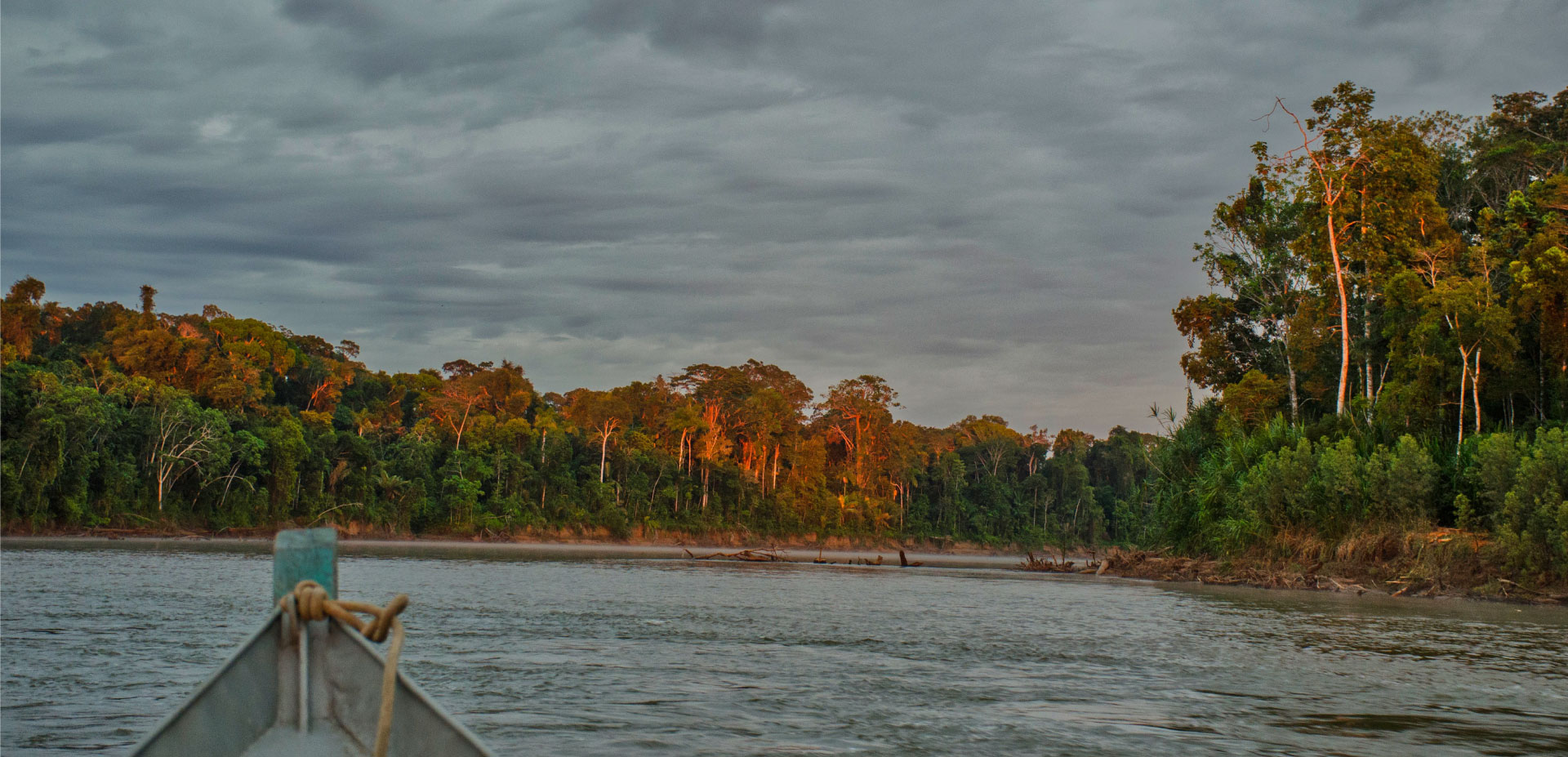
The average temperature in the Amazonia is 28 ºC. It has a tropical climate, hot, wet and rainy throughout the year. The heavy rainy season is from November to April, so we recommend being prepared.
The climate in Manu National Park is divided in two seasons: the drought season from June to September and the rainy season from October to May. You must be prepared because there could be an unexpected “friaje” (cold wave) any time of the year. The weather in Manu constantly changes, there can be rain during the drought season, so we suggest taking precautions. The average temperature in the lowest parts is 35ºC during the day and 25ºC during the night.
Tambopata has a warm and rainy climate throughout the year. The temperature can decrease in June and July because of the “friaje” (cold wave) due to the southern winds.
The weather doesn’t hold the trip back in general, except when the “El Niño” phenomenon is very aggressive.
Peru Time Zone according to Greenwich Mean Time is -5 (GMT -5), same as Bogotá and Mexico throughout the year and same as New York during summer. When it is midday in Peru the hour in the most important cities is:
| São Paulo | 14:00 |
| Frankfurt | 19:00 |
| Nueva York | 13:00 |
| Londres | 18:00 |
| Hong Kong | 01:00 + 1day |
| Singapur | 01:00 + 1day |
In Lima: 0 meters above sea level
In Paracas: 0 meters above sea level
In Nazca: 54 meters above sea level
In Arequipa: 2,350 meters above sea level
In the Colca Valley: 3,500 meters above sea level
In Cusco city: 3,360 meters above sea level
In Machu Picchu: 2,400 meters above sea level
In the Sacred Valley: 2,850 meters above sea level
In Puno: 3,860 meters above sea level
In Manu National Park: 365 meters above sea level
In Tambopata: 300 meters above sea level
In Iquitos: 106 meters above sea level
In Piura y Tumbes: 0 meters above sea level
In Huaraz: 3,038 meters above sea level
In Cajamarca: 2,720 meters above sea level
In Ayacucho: 5,746 meters above sea level
In Chiclayo: 60 meters above sea level
In Trujillo: 52 meters above sea level
The Peruvian Andes are at high altitudes, so it is necessary to take precautions to avoid altitude sickness or “soroche”. It is important to rest a few hours, to walk slowly and to eat light before beginning any tour. We also recommend drinking coca tea that helps with acclimatization. Even though water is potable in most cities, it is advisable to drink bottled water to avoid any problems.
To know if you need a visa to enter Peru, please go to the closest consulate (search here) since the requirement may vary at any moment. For more information, please go to: Visa types to enter Peru
Peru’s official language is Spanish, which is spoken by 80% of the population. However, there is a large portion of the population that speaks Quechua and Aymara (especially in the Peruvian Andes). Moreover, we can find 55 dialects in the Amazonian rainforest.
Electricity in Peru is 220 Volts and 60 Hertz. In some hotels, you may find dual voltage outlets, however, we suggest checking your appliances’ voltage and take precautions by having a power adapter or converter.
During the last years, the Peruvian gastronomy has become famous because of its variety and exquisiteness. Among the most known dishes you can find the ceviche, a dish made of fish and seafood marinated in lemon juice.
The famous “picanterías” stand out in Arequipa. These are typical restaurants from the past. There, we can find dishes made of cheese, milk and shrimp from the Majes Valley. The best-known dish in Arequipa is the rocoto relleno. The rocoto is a spicy fruit that is stuffed with meat and it is served with potato and cheese.
Other dishes you should try are the ocopa arequipeña, solterito de queso, chupe de camarones and adobo arequipeño (dish made of pork’s meat and chicha de jora). The city’s signature dessert is the queso helado prepared with milk, coconut and cinnamon.
You can try alpaca and trout prepared in several dishes in the Colca Valley
You can drink chicha de jora, a beverage made of fermented corn, and a shot of anisado as a digestive.
There is a new gastronomy trend in Cusco called “novoandina”. The novoandina cuisine is based on the creation of new dishes using local ingredients such as quinoa, quiwicha, potato, alpaca and trout. This way, we have dishes such as alpaca tenderloin with “quinotto” (risotto made of quinoa instead of rice) or grilled trout with sautéed vegetables and native potatoes.
In Puno, we can also find restaurants offering alpaca tenderloin and trout dishes with local vegetables and native potatoes. The zone’s pizzas also have a great acceptance due to the Andean cheese used in their preparation and the clay oven used to cook them.
The most important dishes in Iquitos are made of river fish, jerky, chonta or heart of the palm and typical fruits from the area such as cocona and camu camu.
The gastronomy in the north of Peru is one of the most important in the country. We can find arroz con pato (rice with duck), a dish made with cilantro, an aromatic herb that gives an amazing flavor to it. Among the typical dishes we can also find espesado, a corn soup with a side dish of yellow rice, tortilla de raya, which is an omelet made of skate fish with green onions and yellow chili. The white chicha is the zone’s typical beverage. In Trujillo, we can find cabrito con frejoles (goat meat served with beans), shambar (wheat soup made with pork’s skin and smoked ham), the sopa teóloga, turkey and hen broth with soaked bread, potato, milk and cheese.
Paracas and Nazca: international food restaurants, fish and sea food restaurants.
Arequipa: international and local food restaurants.
Cusco: international, local and vegetarian food restaurants.
Aguas Calientes: international and local food restaurants.
Puno: local food restaurants. Taquile only has the basic services.
Chiclayo: international, local and vegetarian food restaurants and fast food chains.
Trujillo: international, local and vegetarian food restaurants and fast food chains.
Iquitos: all meals will be provided by the lodge.
Yellow Fever Vaccine:
We recommend receiving the yellow fever vaccine at least 10 days before your arrival to the rainforest. It is a must to have the vaccination certificate during your trip.
The Inti Raymi or Sun Festival is one of the greatest festivities celebrated in Cusco. It takes place every year on June 24. This celebration displays a representation of how the Incas carried out a ceremony to worship the sun god.
According to Inca Garcilazo de la Vega, this celebration took place every year in the winter solstice and lasted about 15 days in which there were dances and sacrifices. The last Inti Raymi with the attendance of an Inca emperor was carried out in 1535.
Due to the Spanish conquest, this festivity was forbidden in 1572 since it was considered a pagan celebration and an offence to the catholic religion.
Thanks to the festivity’s historic reconstruction by Faustino Espinoza Navarro in 1944, the Inti Raymi is once again a public celebration that receives thousands of tourists from all over the world.

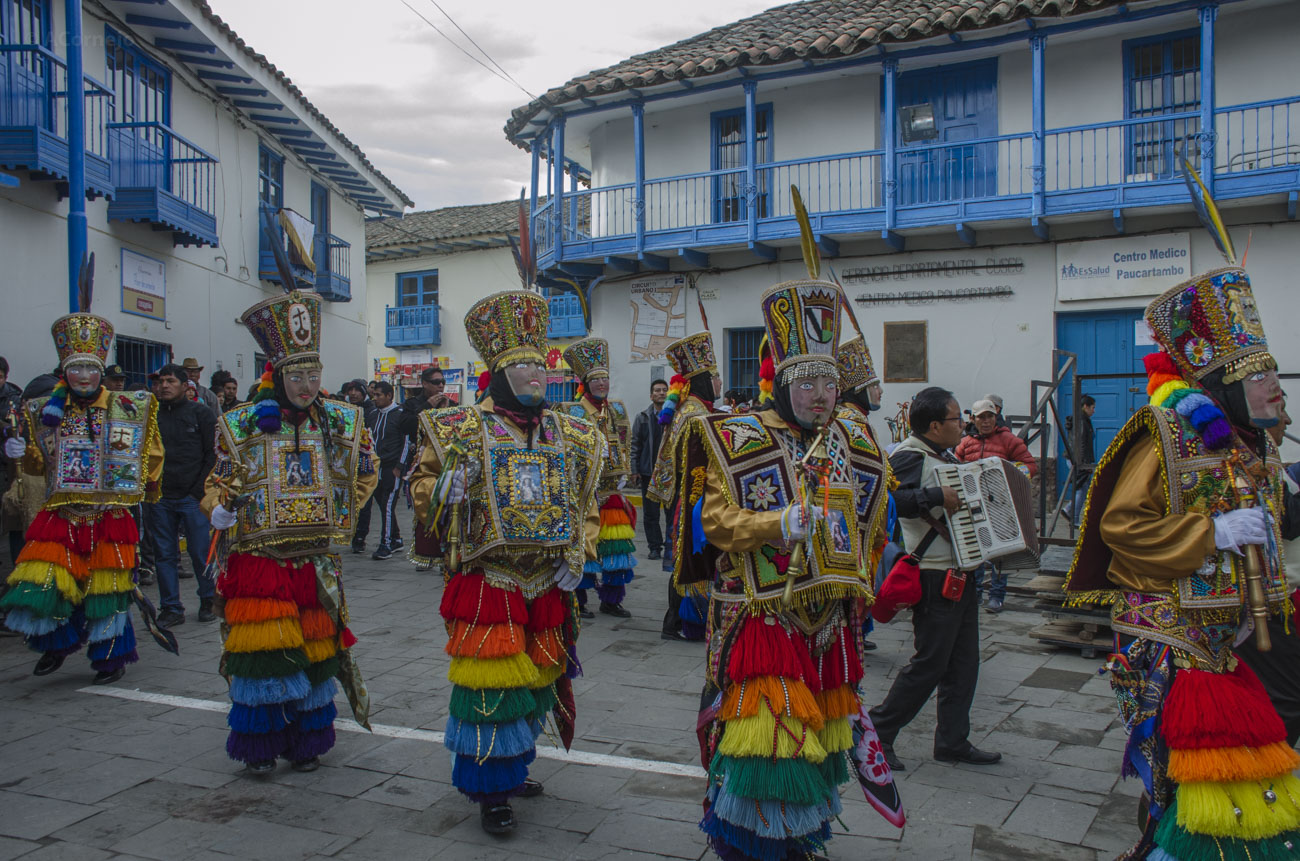
 The Virgen del Carmen or Our Lady of Mount Carmel festival is celebrated from July 15th to July 18th every year in a small and picturesque town called Paucartambo, 110 km from Cusco city. Thousands of local, national and international devotees get together for this celebration.
The celebration starts on July 15th in the afternoon with fireworks, dances and ringing of bells. The dances represent the combat between the highlands’ Q’olqas and the Chunchus from the west that compete for the love of the Mamacha del Carmen. These dances are performed by twelve local groups with colorful costumes that portray the celebration with a bonfire, races and stunts. From 10:00 p. m. the music band and the steward get ready to serenade Our Lady. The celebration ends with fireworks.
 The main day of this festivity is July 16th and it starts at 05:00 a. m. with a dawn mass. At 10:00 a. m. the main mass is celebrated with beautiful chants from the Qollas and Qhapac negros. Once the mass is over, the celebration continues with music bands and dance groups that go out to the streets and squares joyfully throwing dolls and miniature pieces of furniture from the balconies. At 3:00 p. m., the procession that goes around the town starts with Our Lady on the processional platform being followed by devotees and dancers.
The “bendición y guerrilla” (blessing and guerrilla) is celebrated on July 17th. After the blessing of the mass, the troupes head towards the cemetery chanting to remember the deceased dancers. There is another procession in the  afternoon that crosses the famous Carlos III bridge. Once the procession is over, people head once again to the square where the celebration continues with music and dances.
On the last day, Our Lady of Mount Carmel is placed in the baptistry to carry out the traditional “ocarikuy” where kids and teenagers get a blessing.
On July 19th the image of Our Lady returns to its altar and is dressed in her everyday clothes. The ceremony takes place with the presence of devotees, dance groups and musicians.
 Sunrise at Tres Cruces
Continuing the route out of Paucartambo for 59.4 km, we will arrive at the Tres Cruces viewpoint (3,800 ma. s. l.) where we can see one of the most beautiful sunrises in the world. Taking one night for this activity is worthwhile.
Paucartambo is a very small town so it has very few accomodations for tourists. It is advisable to book well in advance. There are some local families that offer beds for rent. It is also advisable to hire a travel agency for the celebration and for the visit to Tres Cruces to watch the sunrise.
The temperatures tend to be very low in this area during this season, so it is necessary to bring warm clothing such as jackets, gloves and bonnets.
Add to your trip Cusco, Sacred Valley and Machu Picchu.
Lampa is a small town in the department of Puno, about 90 minutes from Puno city or 40 minutes from the airport of Juliaca.
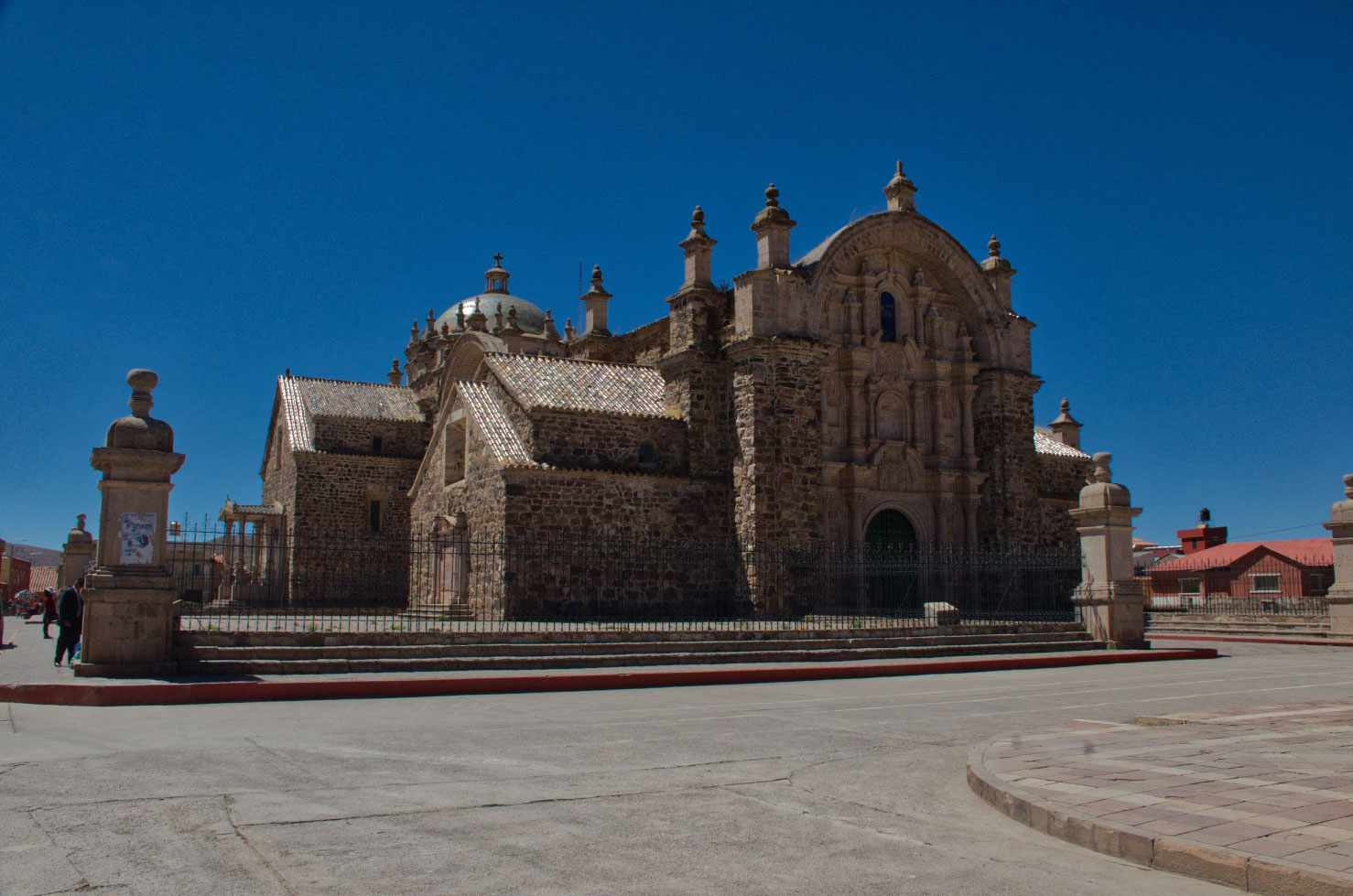
 It is also known as La Ciudad Rosada (The Pink City) because of the color of the stone used to build the temple of Santiago Apóstol, which is the city’s cathedral. This temple was built in 1678 with a clear Renaissance influence under the supervision of Francisco de Goyzueta Maldonado, a priest from Arequipa. Its interior is decorated with wood and marble. In the upper part of the side aisles there are beautiful stained glasses that fill the whole temple with light.
This temple has a vault with a small chapel that was built over an ossuary and that is topped with a replica of Michelangelo’s Pieta made in aluminum. Under the chapel the remains of engineer Enrique Torres Belón, the city’s benefactor, lie.
At one side of the temple, we can find a small and welcoming square that is perfect to have a rest before visiting the Lampa’s municipality. This building has a library that contains the town’s relevant information and a display of paintings made by local artists that is worth visiting. The most representative display is next to the library where the only replica of Michelangelo’s Pieta made in plaster in the world is kept.
Lampa is perfect to walk through its alleys and take pictures. It is a great choice to visit if you are in Puno and Lake Titicaca.
You can request to visit Lampa in your Lake Titicaca tour.
Follow us in Facebook and Instagram
The Andean Baroque route consists of the visit to 4 churches in Cusco: La Iglesia de la Compañía (Church of the Company of Jesus) the Canuncunca, the Huaro and the Andahuaylillas churches. These four churches are currently run by the Jesuit order in Peru that allocates the income generated by the visits to the temples and the sales of the route’s stores to improve the inhabitants’ living conditions through social work. For more information about each temple click HERE.
In this article we will focus on the social work carried out thanks to the people that take this tour.

In the province of Quispicanchi, south of Cusco, 650 boys and girls, divided in four dining rooms, are served.
Boys, girls and teenagers that are exposed to a high degree of vulnerability such as poverty, single-parent families, family violence, among others, are provided with well-balanced food in the diners of Andahuaylillas, Huaro, Urcos and Ocongate. Personal hygiene habits are put into practice and they are taught to brush their teeth, wash their hands and hair. In many cases, personal hygiene habits are not taught at home and they are very important for health, protection against stomach infections and for their personal development.

After lunch, the boys and girls go to the library where they do their homework supported by a tutor since in most cases the children’s parents are illiterate or have just studied until second grade of primary school and it is not possible for them to support their children at home. Additionally, to help them improve their reading comprehension there are other activities that draw the children’s attention such as story-telling, the book hospital, silence watchers and “bebeteca” or library for the early childhood, among others. We can find 4 libraries in the same province where 350 boys and girls receive support.
Quispicanchi has 4 computer labs that are used by 250 boys and girls. These labs are used as a support for doing their homework, and the children are supervised by teachers who teach them to use them properly. The computers are used after going to the library to promote the research through books and encyclopedias. These computer labs keep the children more updated regarding technology.
 There are 3 play centers where approximately 360 boys and girls go to, once they finish their homework, so they can relax and develop their fine and gross motor skills. The activities carried out mainly through playing, allow them to strengthen their self-esteem and develop their social and personal skills. These games allow the identification of the kind of violence they are victims of (physical, psychological and/or sexual) in order to take immediate action through the parish defenders.
Games that let the children develop their creativity, innovation, patience and team work are performed, as well as handcrafts, music, theater and environmental care activities. All these activities are focused on strengthening the children’s self-esteem, values and social skills.
 The luthier workshop is possible thanks to the commitment of Sinfonía por el Perú, a foundation created and presided by the tenor Juan Diego Flores, Backus and the Society of Jesus. This workshop is oriented to 14 to 21-year-old youngsters who learn to manufacture stringed instruments such as guitars and violins made of walnut wood, mahogany, Baltic pine, rosewood and palm tree. Once the instruments are manufactured they are owned by the youngsters, so they can learn to play and create music.
In the weaver workshop, 40 ladies are trained to weave with knitting needles. The production is commercialized and

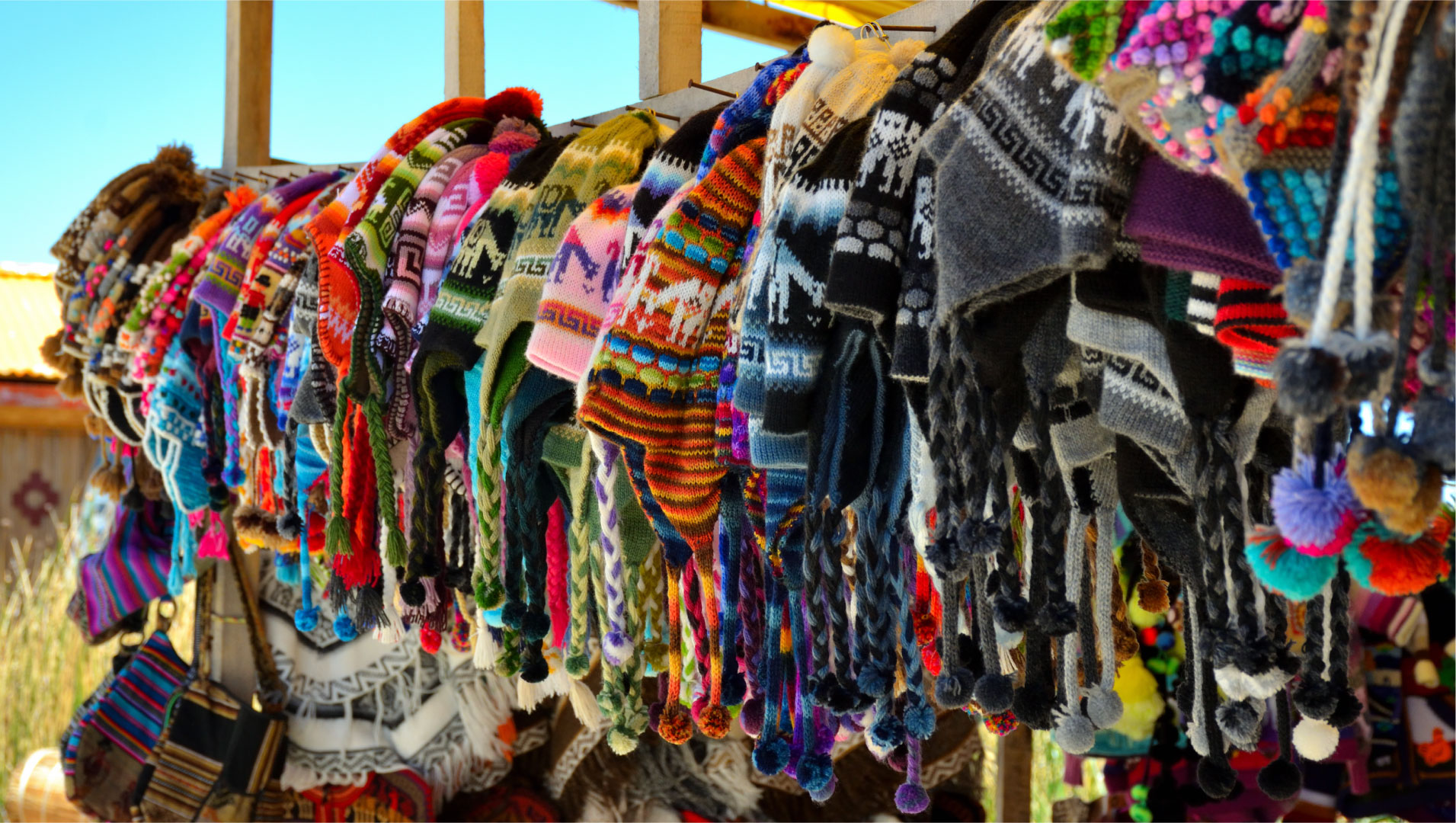
exported to countries such as Australia, so they receive fair payments. Several textiles for babies are manufactured here: blankets, dresses, onesies, sweaters, chullos (woollen caps) and alpaca and cotton stuffed toys, which go through a quality control that emphasizes on details and that is aligned with the market demands.
Our visit to the churches of the Andean Baroque Route, will therefore, leave us not only with beautiful pictures and admiration for art but with the pride of supporting hundreds of boys, girls, teenagers and families to build a better country and have a better life quality.
Follow us in Facebook and Instagram

Discover with us some of the most beautiful churches in Peru, in which with a little imagination and knowledge about catholic history you will be able to decipher the evangelizing paintings on their walls.
The Andean Baroque route consists of the visit to 4 churches in Cusco: La Iglesia de la Compañía (Church of the Company of Jesus) the Canuncunca, the Huaro and the Andahuaylillas churches. These four churches are run by the Jesuit order in Peru that allocates its income for social work in the south of Cusco.
 La Iglesia de la Compañía (Church of the Company of Jesus) is located in Cusco`s main square. The construction of this church started in 1576 over the Amaru Cancha’s Incan temple. The church was destroyed in 1650 by a strong earthquake and it was consequently rebuilt completely the same year. The church was built in stone in a Baroque style and has a cross-shaped layout. Its interior preserves one of the most impressive altars in Cusco, it is carved in wood and covered in gold leaf. The church is also a Cusco School’s sculpture and painting museum.
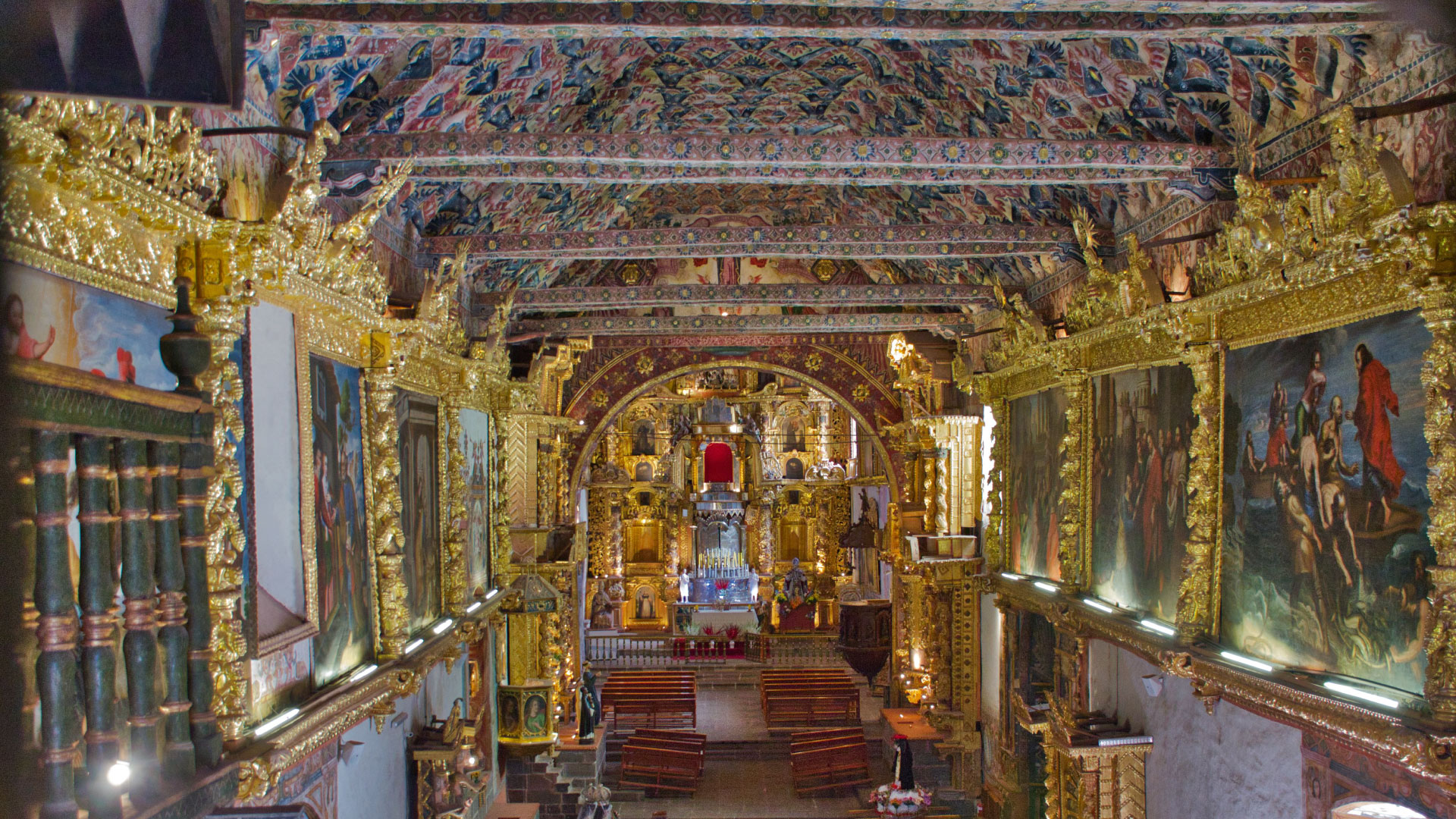
 The Virgen Purificada de Canincunca church was built at the beginning of the 17th century over an ancient Wari center, located an hour by car (44.2 km) south of Cusco city. This chapel is next to the Urcos lagoon. Its internal walls and ceiling are decorated with beautiful paintings of flowers and angels that date from its construction. The carved wooden altar is covered in gold leaf and is decorated with Cusco School’s paintings.
The San Juan Bautista de Huaro church is a few minutes from the Canincunca church (1 km). Its construction dates from the end of the 16th century and the beginning of the 17th century. This Renaissance-style church stands out because of the impressive mural paintings on its interior that even cover the ceiling. The artist, Tadeo Escalante represents the last stages of the human life, death, final judgement, hell and glory. The main altar carved in wood and covered in gold leaf has a shrine covered in embossed silver.
 And last, but not least, the San Pedro Apóstol de Andahuaylillas church which is known as the “Sistine Chapel of the Andes”. It is located 5 km from the Huaro church in the Andahuaylillas town. The construction of this temple started in 1610 at the initiative of the parish Juan Pérez de Bocanegra. Like the last two above-mentioned temples, this one has its walls and ceiling decorated with paintings of angels, flowers, saints and crests. The choir has two organs that are still working and are considered the oldest in Latin America.
The most beautiful aspect of this route is to know the social work carried out with the funds raised by this tour. I will give you more details about this tour on my next article.
Hi everyone! As I promised, I am telling you about experiencing a week in the Manú National Park in this article.
First of all, you must have the most important items for your trip in your luggage. Remember that since this is a national reserve there is a lot of services that are restricted in the park, there is no access to internet or mobile signal.
It is important to pack the following items:
The trip started in Cusco in the early morning. Our transport picked us up from the hotel around 5 a.m. and we headed northeast to Paucartambo town.
 Once there, we made a stop to have breakfast. Then, we took a stroll through Paucartambo town visiting its main square and church. Here, every year, on July 16th the town celebrates the day of La Mamacha Carmen or Virgen del Carmen with a big party. The story has it that the image of the virgin was sent from Spain on the second half of the 16th century to Puno. At the same time, the image of the Virgen de la Candelaria was sent to Paucartambo. However, there was a mistake and the destination of both images was reversed and the Virgen del Carmen arrived at Paucartambo and the Virgen de la Candelaria arrived at Puno. When the people from Puno found out about this mistake, they tried to get the image of the Virgen del Carmen back entering into a dispute with Paucartambo, whose people hid the image in the rainforest for a while. The Virgen del Carmen party, represents those disputes through colorful costumes and dances that accompany the virgin’s procession.
After knowing such beautiful town, we headed towards the Manú National Park again.
 We arrived at the Acjanaco pass, which is the entrance to the park, after going uphill for two hours. There, we made a short stop to stretch our legs and use the restrooms if necessary. This is the highest point of the route (3,600 ma. s. l.) From this point, we started our way down entering the cloud forest.
The cloud forest has an area of more than 3,500 hectares that go from 3,000 m a. s. l. to 1,300 m a. s. l. This is a very important area for humanity since it works as the park´s buffer and support area. The cloud forest works as a sponge, it takes water from the rain, condenses the clouds and then lets it out in the lower parts. This effect reduces the risk of flooding and landslides, lowering the sedimentation.
The cloud forest is the habitat of the spectacled bear, also known as Andean bear, South American bear, ucumari and jukumari (Tremarctos ornatus), which is currently an endangered species. Though we didn’t have the chance to see them, they wander the area looking for food. On our way, we had a short trek to have a closer view of the huge biodiversity of the area and admire it even more. While we were walking, a coati (Nasua) suddenly passed running just in front of us without giving us time to capture the moment with our cameras.
 The forest is full of a lot of bird species like the Andean cock-of-the-rocks (Rupicola peruviana), which is the national bird of Peru. We could also see flora species such as orchids, bromeliads, ferns as well as different tree species.
After we had lunch on the route.
After 30 minutes sailing downstream, we got to the lodge. There, we had the afternoon free to have a stroll around the lodge and take a shower. After dinner, at 10, the lights are turned off and we rested with the rainforest’s whisper.
The group’s adventurers got up early to slide through the trees by zip line. It was amazing to go hanging through the rainforest with the adrenaline flowing in my veins. Here’s a video: VIDEO
After a couple of adventure hours, we went back to the lodge to have breakfast and to get on our boat to continue our trip.
We were surprised by the weather that day, we were caught by the friaje, so we had to take our sweaters from the bottom of our backpacks to wrap up. On our way downstream, we found some heron (Ardeidae) species, cormorants (Phalacrocorax) a black solitary eagle (Harpyhaliaetus solitarius) and American black vultures (Coragyps atratus).
We can usually see much more bird, mammal and reptile species, but because of the cold and cloudy weather the animals took shelter and didn´t let us see them.
 We had lunch on the route on the boat. After 8 hours, we arrived at the Boca Manú town where we spent our second night. There, we found some other small bird and insect species. The rest of the afternoon we had free time to take a stroll and take some pictures. At night, we dine and once the lights were turned off we rest with the whisper of the night animals.
On our third day, we woke up very early to go to the park’s reserved zone. Waking up early comes with a prize, it is one of the most beautiful sunrises I have ever seen.
About one hundred meters on the river in Boca Manú we made a stop in a checkpoint called El Limonal where we received information about the park and how we should take care of our environment.
Around the facilities we found some spiders that were very big. One of them apparently had a bat for dinner the night before.
 We got on our boat once again and we could see some birds and reptiles such as the spectacled caiman (Caiman crocodilus) and yellow-spotted river turtle (Podocnemis unifilis).
We were looking for monkeys on the trees when we suddenly heard one of the members of our group yelling “a jaguar!” (Panthera onca). Our guide immediately asked us to keep quiet, so we didn’t scare the impressive animal. We turned to the rainforest and we could see the largest feline in America which is also known as otorongo, a name that comes from “uturuncu” a Quechua word that means “the one that kills in a jump”. This animal was considered as a god in the Inca culture and in some pre-Incan cultures such as Chavín and Paracas. What a great experience it was to see such feline that close, I was really amazed.
 After a good photoshoot, our friend, the jaguar left us, and we continued our trip on the river.
On the route we found a lot more of bird species such as white-throated toucans, (ramphastos tucanus), macaws (Ara), different herons (Ardeidae) species, black skimmers (rynchops niger), tropical kingbird (Tyrannus melancholicus), black solitary eagle (Harpyhaliaetus solitarius), Fork-tailed Flycatcher (Tyrannus savana), swallows, among others.
We also found reptiles such as spectacled caimans (Caiman crocodilus), yellow-spotted river turtles (Podocnemis unifilis), and black caimans (Melanosuchus niger). We were also lucky to see a capibara (Hydrochoerus hydrochaeris) family.
We arrive at the camp where we stayed for two nights almost at sunset. At night, after dinner, we took a stroll in the middle of the rainforest. It is an amazing feeling to walk on the rainforest´s paths with just a flashlight lighting the way, all your senses intensify. It is important to follow the group all the time and be attentive to the guide’s comments.
 On our fourth day, we woke up very early with the black howler monkeys’ (Alouatta caraya) calls. After breakfast, we left on our boats towards Cocha Salvador (Salvador lagoon) We sailed on a catamaran that has a comfortable platform from where we can see the whole landscape. While on the boat we took pictures of birds such as hoatzins (Opisthocomus hoazín), green ibises (Theristicus melanopis), red capped cardinals (paroaria gularis), ringed kingfishers (Megaceryle torquata), white-throated toucans, (ramphastos tucanus), macaws (Ara), swallows, among others.
After a long wait, we could see a giant otter (Pteronura brasiliensis) family in all its splendor.
On our way to our boat, we found capuchin monkeys (Cebus) and spider monkeys (Ateles).
 We went back to the camp to have lunch and in the afternoon, we visited the Casa Matsiguenka, where we found a native community that showed us their lifestyle.
At night, after dinner, we rested.
On our fifth day, we began our way back, but not before visiting a platform in the rainforest´s high lands, which allowed us to see more monkey species among the trees and the cocha Otorongo (Otorongo lagoon).
We returned to our boat and left for Boca Manú. On our way, we were still amazed by nature and besides all the birds we had already seen we also found a lineated woodpecker (dryocopus lineatus).
We arrived at Boca Manú and after taking a shower we had a toast for one of our group member’s birthday.
On our penultimate trip day, we left Boca Manú towards the first lodge. On the route we saw different heron and cormorant species, as well as turtles, once again.
After almost ten hours sailing upstream, we arrived at our lodge to have dinner and rest.
On our last day, we sailed upstream to the Atalaya port where our transport was waiting for us. On our way to Cusco, in the middle of the cloud forest we had the chance to see the Andean cock-of-the-rocks (Rupicola peruviana). We had lunch on the route with the forest’s view and harmony.
 On our way, we made a stop in the Ninamarca Chullpas. The Ninamarca name is possibly a Quechua word. Nina means fire and marca means town. These are pre-Incan tombs located over 3,000 m a. s.l. They were built with clay and seventeen 2,5 meter-high chullpas have been found in the area. We arrived at Cusco in the afternoon.
This was definitely one of the best trips of my life. I had never been so close to nature and to the animal kingdom. The city noise and routine make us forget the extremely amazing world we live in, so it is important to disconnect ourselves from our daily routine and live a few days 100% connected to nature.
Let yourself be wrapped up by the experience of travelling to one of the most important reserves in the world with us. Check out our tour to the Manú National Park clicking HERE.

In this article I am giving you a bit of general information about the Manú National Park.
Manú Natural Park is between Cusco and Madre de Dios, southeast of Peru.
The park was established in May 29th, 1973 with an area of 1,716,295.22 hectares. Its purpose is to preserve  representative samples of this area´s biodiversity, to contribute to the research of different species, as well as to acknowledge and preserve the cultural diversity and the self-determination of the area´s indigenous communities while encouraging sustainable ecological and cultural tourism.
The park is home to a great amount of wild fauna species. About 160 mammal species, more than 1,000 bird species, 40 lizard species, 50 snake species, approximately 140 species of amphibians, 6 species of turtles, 3 caiman species and 210 species of fish have been identified. It is estimated that there are around 30 million insect species in the reserve.
The park is divided into three areas: the transition or cultural zone, the buffer or reserved zone and the core area or Manú National Park.
 The transition or cultural zone begins in Paucartambo at 2,900 m a. s. l. We will arrive at the Tres Cruces viewpoint (3,800 m a. s. l.) following the route for 59.4 km. There, we can watch one of the most beautiful sunrises in the world. Since this is one of the park’s highest spots, we will descend through the cloud forest which is home to more than 8,000 plant species such as different fern species and medicinal plants, more than 400 bird species including Andean cock-of-the-rocks, the national bird of Peru, as well as 10 mammal species such as the spectacled bear.
The cultural zone reaches the Atalaya port by land and up to the Boca Manú town by boat. During the ride by boat, we can see mammals such as collared peccaries, capibaras and different monkey species and birds such as egrets, cormorants, parakeets, ibises, among others. We might also see reptiles such as river turtles and hopefully a caiman.
 The buffer or reserved zone begins 100 meters from the Boca Manú town at a checkpoint called El Limonal up to the Panagua river gulch. Regulated tourism and scientific research of species are allowed in this area.
Since entering this zone has more restrictions and difficulties, there is a larger amount of species of birds, mammals and reptiles inhabiting in it. Here, we might see capibaras, jaguars or otorongos, South American tapirs, collared peccaries, deer, river otters and up to 13 monkey species. We can also see birds such as hoatzins, macaws, toucans, hummingbirds, woodpeckers, among others, as well as reptiles like black caimans, white caimans, turtle, lizards and snakes.
Finally, the core area or Manú National Park is an intangible area where the entrance is forbidden. Uncontacted tribes that live there might be in danger if they had any contact with civilization since they would be exposed to virus not known by them.
In our next article I will tell you about the experience of living 7 days in this amazing place.
Follow us in Facebook and Instagram
Hi everyone! The first article for our Colourful Peru blog is dedicated to one of my favorite places in the Peruvian Andes: the Lake Titicaca – Puno.
The Lake Titicaca is shared with Bolivia and it is located at 3,812 meters above sea level (12, 506.56 feet), between Puno (Peru) 56% and La Paz (Bolivia) 44%. It is known as the highest navigable lake in the world and the second largest in South America with an 8,400 km2 surface area.
Legend has it that Manco Cápac, the first Inca, and Mama Ocllo, both children of the sun, emerged from the Titicaca waters to build a great empire as ordered by the Sun god.
On the lake we can find several islands among which the floating islands of the Uros, the Taquile and Amantaní islands and the Sun and Moon islands in Bolivia stand out.
Now, I am going to tell you a little bit about the experience of living a two-day trip to this impressive lake.
On our first day, we woke up early to get ready and have breakfast at the hotel in Puno. Our guide, Willy picked us up before 8 a.m. to take us to the port. It is important to take with you warm clothing, a windbreaker jacket to take onboard, sunscreen and a cap.
 Our first stop was at one of the Uros islands. The Uros are several small floating islands built by its own inhabitants with totora which is a plant that grows on the lake’s surface. There, our guide with the help of the island’s inhabitants, told us about how they built their islands and houses and the story of how the island’s first inhabitants started 500 years ago. Then, we had the option of sailing on a totora raft and we had free time to enjoy the view, to take pictures and even to speak to the inhabitants to know more about their culture and lifestyle.
We heard our guide’s call to get on the boat and sail a few meters to get to an island where we found several stalls to buy crafts handmade by the inhabitants. I enjoyed a lot the intense colors this place offers us combined with the lake’s blue and the totora straw.
 We got onboard once again, and continued our trip for two more hours until we got to the Amantaní island. This island has a 9.28 km2 surface area and it is inhabited by a little over four thousand people. Upon arrival, our guide allocated us with a host family with whom we spent the night and ate. There, you won’t find hotels, lodges or restaurants, so it is the best place to live a day as a local. Mrs. Rosita, our hostess, gladly welcomed us and took us to her home: A small two-story house that was very clean and – above all- had an amazing view.
We left our backpacks in our room and went to the dining room to have lunch. There we met two Irish girls that were also staying at Mrs. Rosita’s house.
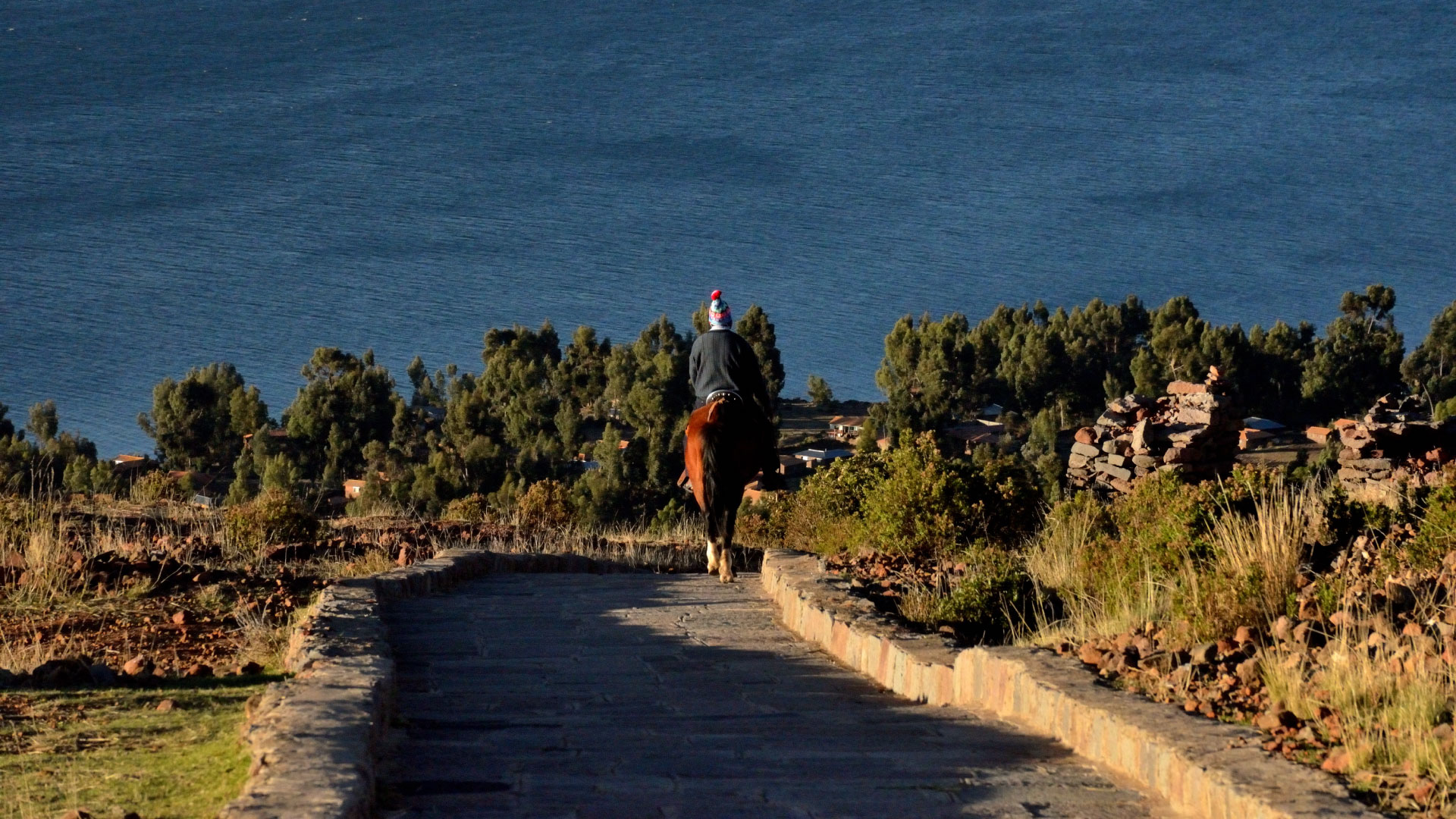
 At the top of the island we found two temples: Pachatata and Pachamama. After lunch, we began a trek to the Pachatata temple. We took amazing pictures of the island and lake while our guide told us about the temples’ history. After walking for more than an hour, we arrived at the top where we could watch a beautiful sunset.
Once the sun set, we left the temple and arrived home to enjoy a dinner prepared with local ingredients. After dinner, we had the option of going to the island’s party where we got together with other visitors and their hosts to share our experiences and make new friends from around the world. Mrs. Rosita lent us beautiful Amantaní’s traditional costumes that we used to go to the party. On our way to the party’s place, we could admire the sky full of stars. Don’t forget to make a wish if you see a shooting star, I did so :).
The island is very cold at night, the temperature can drop to -10°C (14°F) depending on the season. Even though the beds are dressed with several blankets, I suggest taking a sleeping bag that will allow you to rest and replenish energy for the next day.
 On the second day, the sunlight woke us up very early. After having a delicious breakfast of pancakes and muña (a mint-like Peruvian herb) tea Mrs. Rosita came with us to the port to say goodbye.
We boarded our boat and we arrived at Taquile after an hour. This island is at 4,000 meters above sea level (13,123.36 feet) and has a 5.72 km2 surface area. It is inhabited by 2,000 people whose policy is based on the Inca’s moral code: “Ama sua, ama llulla, ama quella” which means “you shall not steal, you shall not lie, you shall not be lazy”. We walked about 30 minutes uphill until we got to the viewpoint. We spent some time there watching the lake and charging energy.
Then, we took a stroll with our guide while he told us how people in Taquile live. Before arriving at the port, we had a delicious trout for lunch at a local restaurant. If you are a vegetarian you can also find meat-free dishes.
 Before we got onboard to return to Puno, we took the opportunity to take the last pictures and admire the amazing landscape the island offers.
For me, the Lake Titicaca is a magical place, full of energy and wonderful landscapes. If you come to Peru, you shouldn’t miss a visit to this lake. There, you will live the essence of the Andes and share two days with its inhabitants getting to know their lifestyle, culture food and traditions.
Check out this suggested journey: Puno and Lake Titicaca in 4days
Follow us in Facebook and Instagram

Our team will be contacting you as soon as possible.
